Tuesday, December 27, 2022

Pivot to Peace and Solidarity: War with China is not inevitable

 Flohri, Emil. "And, after all, the Philippines are only the stepping-stone to China." Judge Magazine, 1902


In 2001, the question of “what to do with China” filled cable news shows, college dorm rooms, navy wardrooms, ROTC leadership forums, and political science lecture halls with much excitement.  Would-be officers, amateur philosophers, armchair classicists, and professional pundits debated “Thucydides’s trap”: Is China’s rise a threat to the US?  “Yes” was almost invariably implied.  

With 9/11 and the “global war on terror,” the China talk took a back seat.  But now, it is front and center again.  Russia is a mere sideshow.  The war industry, war media, and war academe are salivating.


1. It is right to criticize Chinese state power when it oppresses.  In skepticism towards US imperialism, we should not reflexively defend other states or other imperialisms.  With Tiananmen, Tibet, the Uighurs, Hong Kong, and the recent COVID crackdowns, there is plenty to criticize. 

A.  Intercepted: Inside China’s Growing Surveillance State (theintercept.com)  

B.  Why China is building islands in the South China Sea - Vox

C.  Socialists Should Support the Popular Resistance in China - The Call (socialistcall.com)

D. Some really good, consistent anti-imperialist theory: The Specificity of Imperialism - Viewpoint Magazine

E. However, as the historical record shows, the US government, often at the behest of US capital, has criticized, or ignored, or even abetted Chinese human rights abuses, as it has seen fit, to its material convenience. 

F. “Whataboutism” in bad faith can deflect from real crimes, but at its best, it simply calls for a consistent ethic to be applied.  In fact, it is often the charge of whataboutism, rather than the asking “What about ___?” that tries to avoid the serious, longer conversations: Is “Whataboutism” Always a Bad Thing? ❧ Current Affairs

i. Seriously, what about Palestine, Yemen, Iraq, or the hundreds of other places where we commit or enable war crimes and human rights abuses?


2. Most Americans are unfamiliar with how the US, with the European powers, have long encircled, antagonized, and carved up China.

A. Encirclement has long been the policy of western powers.  The US military intervened over thirty times between 1820 and 1949 at the behest of US capital interests,

i. No doubt these actions contributed to Maoist/communist resentment and blowback, and the eventual “loss of China” in 1949

B. Much of our understanding of “Taiwan vs. China” rests on misremembering of the US’s role in the Chinese civil war and the US’s role in Korea, both prior to the standard (conveniently given) June 1950 start date of the Korean war and after.  The ten-part season 3 “Blowback” fills in some crucial gaps: Blowback


3. We currently encircle China. We currently provoke China. If We Want Humanity to Survive, We Must Cooperate With China (chomsky.info)  

A. Some practice of cognitive empathy (which is different than emotional empathy) might help us see how China views Taiwan and views us: China and the Challenge of Cognitive Empathy (substack.com)

B. My own trivial experience with a Chinese sub: An Elegy for Ted McGrath: Russian Bears and Chinese Subs

C. Wtf was Nancy Pelosi doing in Taiwan? Amidst Uproar Over Nancy Pelosi’s Visit to Taiwan, Media Ignores Aggressive U.S. Maritime Action in South China Sea | CovertAction Magazine

D. Several months ago, the US just completed its annual RIMPAC exercise, which among other things antagonizes China and devastates the environment.  For some years, it actually included China, which while still problematic and militaristic (and environmentally destructive) was at least less provocative: Abby Martin at RIMPAC War Games: The Inside Story [PREVIEW] - YouTube


4. We can and should stand in solidarity with Ukrainians resisting Russian aggression, We must not practice the "anti-imperialism of idiots": A letter to the Western Left from Kyiv | openDemocracy.  But, some of our current posturing towards China builds on selective remembering of our role in the thirty years prior to the Russian invasion of Ukraine: How cognitive empathy could have prevented the Ukraine crisis (substack.com) 

A. While we should practice solidarity with Ukraine, that doesn’t necessarily mean we automatically (without serious debate) should flood that war with billions of dollars of weapons, especially at the risk of escalating it to nuclear war: The Democrats are Now the War Party (substack.com) 

B. That also doesn’t necessarily mean the US supports Ukraine out of some love for “democracy”: An Elegy for Ted McGrath: “This, this is living History. Everything we are doing and saying is thrilling—it will be read by a thousand generations, think of that! Why I would not be out of this glorious delicious war for anything the world could give me.”

C. Also what about?  Or rather, imagine if the same sympathy for and solidarity with the Ukraine we see in the US was extended towards Palestinians, Iraqis, Afghans, Vietnamese, or Laotians (and the list goes on)?


5. Our current posturing towards China —holding ourselves up as the beacon of freedom and democracy against Chinese unfreedom—rests on some major U.S.-in-WW2 mythology.  Are we more free and democratic than China?  Yes, I believe so.  Do we really care about freedom and democracy elsewhere?  On our own terms, only when it suits our interests.  

A. Some longer thoughts on (liberal) foreign policy hypocrisy: An Elegy for Ted McGrath: Lexus trumps olive tree: The limitations of a "good liberal" (Part 5: "You can't go from Saddam to Switzerland without getting stuck in Hobbes")

B. Yes, we helped defeat Nazi Germany.  But, the US was very forgiving and then very eager to employ Nazis and other fascists against communism in the Cold War: US did not defeat fascism in WWII (newagebd.net)

C.  Just like we were very forgiving of Japanese nationalist extremists, also after WW2, when we employed them in our own anti-communist designs on Korea and China. 

D. Other US in WW2 destructive myths. “Romanticized stories about the Second World War are at the heart of American exceptionalism.”: Destructive Myths - Dissent Magazine

E. Tangent: Catholic anti-communism makes bedfellows with fascism: Catholic Anticommunism with Giuliana Chamedes · The Dig (thedigradio.com)


6. Our corporate media, the big think tanks, and much of the academy give us the impression that we have free inquiry.  But our spectrum of debate is extremely limited, and for the most part, those dominant entities “manufacture consent,” often towards war.  US propaganda is much more subtle and sophisticated than Chinese propaganda 

A. Truth Killers: The Corporate Media and the Military Industrial Complex.    

B. Think tanks push for war.  We are talking Ivy League PhD suits not just the jingoist Trump Fox brutes.  The Think-Tank Military Industrial Complex: Shilling for the Merchants of Death 

C. How To Avoid Swallowing War Propaganda ❧ Current Affairs

D. Excellent film recs on this role of the corporate media and war: 

i. Weapons of Mass Deception

ii. Outfoxed 

iii. Peace, Propaganda, and the Promised Land 

iv. Control Room

v. And of course, Manufacturing Consent (but more so the book by Chomsky and Herman)


7.  Ways out, ways forward 

A. Practice internationalism

i. (How) Should Class War Go Global? Building an Anti-Corporate Left Internationalism ❧ Current Affairs

ii. Left Internationalism in the Heart of Empire - Dissent Magazine

B. Practice solidarity.  For example:

i. International trade unions federations try to unite people across borders, to fight U.S. capitalism and that peculiar blend of Chinese Communist Party capitalism: Freedom Report 2022: Unions Building Peace - International Trade Union Confederation (ituc-csi.org)

ii. Veterans for Peace China Working Group: China Working Group | Veterans For Peace

iii. Amnesty International (western human rights groups sometimes overlook US and US client states crimes, or are late to the game in decrying them, but nevertheless, they often do great work). 

a. Re China: Everything you need to know about human rights in China - Amnesty International Amnesty International. 

b. Re US: Everything you need to know about human rights in United States of America - Amnesty International Amnesty International

iv. Study more, study deeply on China. Turn off the tv.  

a.  China and the US with Tobita Chow and Jake Werner · The Dig (thedigradio.com)

b. How China Escaped Shock Therapy w/ Isabella Weber · The Dig (thedigradio.com)

c. China Boom w/ Ho-fung Hung · The Dig (thedigradio.com)


Sunday, May 15, 2022

"Let's save our troubles for another day. Come go with me, we've got it made."*


I felt bad for him.  I don’t think he wanted me or any of us to feel bad for him.  He was the captain.  

The Voith Schneider Propellers on our little minehunter had gotten us from Ingleside, Texas to Panama City, Florida as planned.  That was a big feat for the USS Pelican.  Since being back from Bahrain, that was our crew’s first real venture and port visit.  But then, one of the propellers gave out in port.  The required repairs were beyond our on-ship sailor-engineers’ expertise.  The civilian port engineers and Voith Schneider specialists from Norfolk had to fly in to help us fix it.  With that, we ended up stuck in Panama City for well over a week.  That wasn’t altogether bad, with the beaches, the bars, and being 23.  But, we were only supposed to be there for four days.  After that, it was day-to-day.  We couldn’t necessarily plan or feel totally at ease.  The broken engine made the captain stressed, which in turn made us all stressed.  Such was life in the Global War on Terror.

The MWR team (morale, welfare, and recreation) therefore planned a little mandatory fun.  “Let’s enjoy ourselves while we’re here and together.”  Sailors usually grumble about the mandatory part, but they often end up having fun.  We were not a big crew.  There were only about 65 of us.  The plan was for softball, a cookout, and, as long as you didn’t have duty, beer.  We even arranged the watch/duty section to allow the whole crew to rotate through.  A number of us started really talking up the softball game.  A few took up talking trash.  It would be an inter-departmental game.  The captain especially talked it up.  I wasn’t a very good naval officer, but I was decent at softball.  I didn’t have duty, and I was looking forward to it.

When that afternoon arrived and it was time for the big match, we ended up playing only several innings.  I don’t recall which team won--Engineering/Ops or Deck/Supply--but whoever it was, I think it was a blowout.  Some sloppy fielding spiraled out of control.  Once pickup softball becomes a blowout, it’s hard to keep people’s interest.  It’s hard to come back.  With the heat, the frustration, and the buzzed giggling while running the bases, the game gets sloppy and therefore less interesting.  It’s also not like pickup basketball—you typically don’t just reset and play another round.  So, most of the crew shifted to football, despite the heat, which then evolved into some playing ultimate frisbee and others just drinking beer.  For the record, personally, I wanted to continue playing softball.

The captain arrived later to the rec area than he had anticipated in his base rental Chrysler.  He had been caught up on the ship with the engineers and on the phone updating his superiors in Ingleside.  He had his own glove, and remarkably, he was wearing softball/baseball pants.  I had my own glove too—I traveled with it, even by sea—but baseball pants?  They must have made his sea bag packing list, or he just kept them in his stateroom, "condition one," at the ready.  They were tight on him but not tighter than baseball pants usually are.  He also wore a three-quarters sleeve t-shirt, with white base and black sleeves.  When it registered that we were not playing softball, he scrunched his nose up towards his eyes, instinctively.  He asked if we wanted to play softball, if the game was still on.  Perhaps he thought we had been saving softball as the main event, waiting for his arrival.  In hindsight, maybe we should have saved it. 

“Yeah sir, we played a couple innings but then everyone wanted to play football,” said QM1 Haynes, flippantly, catching his breath on the sideline with a cigarette, not grasping the severity of this moment, not even looking at the captain.  QM1 had not noticed the captain’s nose squeeze towards his eyes again—to block the sun? the rage? the sadness?  Even if he did, Haynes probably wouldn’t have cared.  I still contend that I cared, for what it's worth.  

Was the captain going to order us back onto the softball field?  I suppose he could have.  Was he going to yell at us?  I cringed at the possibility.  His voice, by the UCMJ, was legally commanding, but auditorily, it was petulant and grating.  Ordering us onto the field would have made for one terrible, awkward game.  It would have taken “mandatory fun” to the next level.  As part of the MWR team, as a junior officer, I could have suggested, “Hey guys, why don’t we play a couple more innings?”  But, that might have been patronizing, and if they agreed, would the captain then have targeted me because they listened to my soft power and not the threat of his hard power?  In the end, we did not return to softball.

The captain pretended not to care.  He sat down, in his tight softball pants, and took a swig of beer.  He did care, though.  His prominent Adam’s apple was a tell of his pride swallowed, not for the first or last time.

*

The captain had survived an earlier mutiny.  I didn’t think it was actually a mutiny, but as I learned from the XO years later, the captain definitely saw it as one.  I had taken a small part in it.  After months of the captain bullying around Lieutenant Castro, the chief engineer, the latter started collecting statements against the former of similar incidents against other members of the crew.  Castro submitted the letters, unbeknownst to the captain and XO, to the inspector general of the navy.  I didn’t have one specific legal complaint, and in hindsight, maybe I shouldn’t have partook.  He just was an annoying asshole, and I did not like him.  One could definitely argue that that was how life was supposed to be in the military--i.e assholes make the system run--and maybe we were just being a bunch of snowflakes.  

To have command of a ship as an O-4/Lieutenant Commander was not insignificant.  Professionally speaking, the captain was going places.  Nautically speaking, the captain was very good, and he knew he was very good.  More, bigger commands and higher leadership lay in his future.  Psychologically speaking, however, the captain exuded insecurity.  He had orders to make that broken minesweeper go.  It wasn’t going, that did not help his insecurity, and he took it out on us.  Castro’s rebellion had died down, the captain got a slap on the wrist from his superiors, Castro eventually timed out to his next rotation, and life sort of went on on the Pelican.  The captain had to swallow his pride during and after the Castro-initiated “command climate” investigations.  He could not openly retaliate against any of us mutineers.  That would have gotten him in more trouble.  


*

Apparently, after the abbreviated softball game, many in the crew kept on drinking, including the captain.  That was not necessarily a problem until, according to some sailors, the captain got into his car visibly intoxicated.  He drove the 15-mph 1000 yards back to the ship without incident.  If he hadn’t been so widely loathed, if he did not have the legal “non-judicial punishment” power to bust sailors for alcohol-related misconduct, no one would have cared.  But, especially the guys who had been busted for alcohol—they took note.  Petty Officer Wilkes, who several months earlier had been nailed for driving 125 mph drunk down South Padre Island Drive in Corpus, miraculously not killing anyone, saw the captain’s offense as equivalent to his if not worse.  The next day, the crew grumbled and murmured to a degree that pressured us junior officers to say something to the captain.  What would we say, though?  “Sir, you shouldn’t have done that. I wasn’t there to corroborate, but the crew is talking. Can you apologize?  We need to restore good faith and leadership…(even though we know they don’t want you to apologize--they just want you gone)”?  This task fell to our Ops officer.  Ops had only been aboard the Pelican for a couple months.  Therefore, his hands were not sullied by Castro’s rebellion.  Ops was very competent.  He was the golden boy, from southern California, a true believer, “living the dream,” he would proclaim regularly, non-ironically.  His eyes glistened when we lowered the American flag at sunset.  He had played football at the Naval Academy.  He had done Campus Crusade for Christ alternative spring breaks in college, convincing fornicators and underage drinkers not to fornicate and drink.  Knowing Ops and those Christ-like thousand-yard-stare eyes, I bet he converted a few.  He went to church with his blonde southern California wife on Sundays.  He convinced a couple crewmembers to go with them.  His jaw, his biceps could crush the glass-reinforced plastic the Pelican was made of, if the nation needed him to.  He would likely surpass the captain in naval/maritime acumen some time in the future.  Nautically speaking, he was also good.  The captain sensed that.  Ops worked hard, but things came easy to him, including softball.  He didn’t wear the pants or bring his own glove, but he crushed the ball--much farther than I could, for the record (that son of a bitch).  I presume he was the student body president and prom king at his high school.  Maybe valedictorian, too. And psychologically speaking, unlike the captain, he exuded security.  Ops would have to deliver the news, then.  Coming from him might devastate the captain, but he was the one with the moral credibility.  The rest of us would still have to sit there awkwardly.

“Why do I get the feeling that you all hate me?  Like there is a target on my back?” the captain asked.  He almost cried, but he didn’t.  I looked across the table at Mike, who back in Texas would call the base chaplain regularly asking for the captain to be fired.  (The chaplain did not have that authority.)  Captains shouldn’t really care whether sailors really hate them or not.  At the least, they shouldn’t openly ask that question.  Even golden boy Ops was against him now, he likely thought, trying to surpass him already, a couple years ahead of schedule.  That must have been the moment, there in the crowded sweaty wardroom--more than softball the day before--when the captain drew his line in the sand and saw that he was alone on his side of the line.  

*

The work schedule became much more demanding.  Reporting times moved earlier.  Departing times shifted later.  The drills increased.  The verbal thrashings multiplied.  The targeted harassment intensified.  Zoomed out, however, it seemed more bizarre than harsh: we were this tiny ship tied to the pier in Ingleside, Texas that most of the rest of the navy knew nothing about.  We were not the “tip of the spear,” despite what the Squadron’s emblem said.   At the same time, the captain would also have his manic days, when he was uncomfortably positive and nice.  If I got stuck alone with him or with one other and him at mealtime on those days, I almost wished for him to be a dickhead instead.  We were used to dickhead.  

When he would have the wardroom over for dinner at his house with his family, it was uncomfortable and a little surreal, especially after the mutiny.  We would be eating, laughing, and drinking, but he knew that we essentially tried to get him fired and we knew he knew and resented us.  We didn't bring it up, but it was the subtext.  Mike, who had called the chaplain during the week to complain about the captain, would be there comparing his concealed-carry pistol to the captain’s at the grill—the both of them all smiles.  It was very cordial.  Surely, they wouldn’t turn the pistols on each other, in front of the kids, right?  Sometimes, I would see the captain and his family at Sunday mass.  During the sign of peace, I’d wave across the church to them.  At the end of mass, I would try to leave by the side door so as not to get caught in an awkward conversation with them on the way out or get invited to IHOP.

One night, we held a hail-and-farewell for some outgoing and incoming officers and chiefs at this Texas version of Chuck E. Cheese.  I sat across from the captain’s wife and made small talk.  She seemed like a real person, and that night, he seemed like a real person, too.  The times he did not seem like a real person--like when he named his five kids by numbers or expressed pride in missing their births or talked about guns or made a joke about gays--those times actually seemed put on.  Like he had to say those things.  That night, he appeared at ease, genuine.  Some people brought their kids.  They played in the arcade and the ball pit.  There was small talk, jokes, light drinking.  The captain’s wife gently corrected me when I confidently said “Escapade,” playing above, was by Paula Abdul.  “Janet Jackson, you mean.”  “Yes, of course, Janet Jackson.”  She knew. I was grateful for the correction.  We would later reference that night as the “last supper.”  

The next day on the ship, we heard four bells on the 1MC announcing the arrival of the squadron commander, our captain’s boss.  That was unusual, as he didn’t come aboard very often.  About twenty minutes later, the officer-of-the-deck called the crew to the fantail.  The captain was not present.  The squadron commander announced to us that he had just relieved the captain of command.  That is, he fired him from the Pelican.  Then, he dismissed us back to work.  

We didn’t know how to respond.  Most of us were in shock.  Some of us had been rooting for this day.  Mike called Ted, who had transferred months ago and who had been a main target of the captain’s vitriol, to celebrate.  Many of us, myself included, weren’t sure what we were rooting for or if we should be rooting at all.  In the ensuing weeks, there were unsubstantiated rumors about how the captain left the ship crying, how the base police had to go to his house first and warn his wife and help her clear out all of their guns quickly before he came home and how maybe he was suicidal or homicidal.  Other people said they saw him months later sheepishly pushing paper up at the squadron.  Presumably, he did not command another ship, but presumably he finished out or is finishing out his time in the navy until retirement.  As long as he is content with a nice safety net and family life, he will be fine.   

*                    

Texas has been a second chance for me….  It has been a chance for not only land and riches but also to be a different man and, I hope, a better one.  There have been many ideas brought forth in the past few months of what Texas is and what it should become….  We are not all in agreement but I’d like to ask each of you what it is you value so highly that you are willing to fight and possibly die for?  We will call that Texas…..If anyone wishes to depart under the white flag of surrender, you may do so now, you have that right….  But, if you wish to stay here with me, in the Alamo, we will sell our lives dearly.  


That is William Travis’ dramatized speech in The Alamo (2004).  According to legend, Travis took out his sword, drew a line in the sand, and offered the people two choices: surrender or fight to the end.   All but one Anglo Texan crossed the line to join Travis.  In the ensuing battle, they all died, except that one (I presume?), who survived to spread the word:  “Remember the Alamo.”  The Texans would remember the Alamo, they would defeat Santa Ana/Mexico at the battle of San Jacinto, and they would win their freedom and independence.  Then nine years later, they gladly gave up their independence to join the United States.


 The captain—himself from Texas, one typically learned within a minute of meeting him—wished he could have given that speech.  That is, if we had a real mission and if the ship worked.  He wished he could have inspired us to sell our lives dearly in the name of freedom, to rid the world of the terrorists and the weapons of mass destruction.  He had memorized part of Travis’ actual (not fictional) famous letter from the Alamo.  He loved Texas.  He barked regularly about stereotypical Texas pop culture things: guns of course, high school football and football generally, trucks, ATVs, the Alamo, John Wayne movies about the Alamo, Sam Houston, country music, Davy Crockett, and Shiner Bock.  

One time, the captain let it slip that he had been born and spent the first several years of his life in Minnesota, a different Anglo settlement but one without the rough and tough cowboy image.  He quickly covered up the slip with an enthusiastic “I wasn’t born in Texas, but I got here as fast I could,” like the bumper stickers on base read, not ironically.  And, we learned that he was from a sprawling cookie-cutter Houston suburb and that he studied engineering and political science at Rice.  The latter shouldn’t have precluded him from having authentic Texas pride, but Rice University grads weren’t exactly cattlemen or vigilante-rangers. Often, they became oil execs who fashioned themselves cattlemen or rangers.  At some point, as a boy or adolescent, the captain must have consciously taken up that Texas pride.  Maybe he decided Texas would be his thing, perhaps after an early adolescent baseball/softball-related heartbreak--getting cut or getting picked last.  (I got cut in 9th and 11th grades myself.  I know the feeling, and I did not have Texas folklore to comfort me.  Ops probably never got cut.)  Or, maybe the captain took up the Texas pride every morning before he saw us: “Texas… a chance to be a different man,” as the fictional Travis admitted.  My military chain of command on the Pelican not only included our suburban-cowboy captain from Minnesota but also the millionaire-Yale-cheerleader-cowboy George W. Bush at the top.  Bush, who saw Afghanistan and Iraq as his “Indian Country” to conquer—“in-country” for short, in military speak—was not originally from Texas either.  Nor was his thousand-points-of-light president-father.  Nor, for that matter, was William Travis.  Nor Sam Houston.  Nor Stephen F. Austin.  Nor Davy Crockett.  Nor James Bowie.  Nor most of the Texan patriots. 

By all accounts, Santa Ana was a mean son of a bitch, yes.  Yes, the Mexican government invited the Anglo settlers into Tejas.  But, the freedoms the Texan patriots fought and died for at the Alamo were principally the freedom to have as much land as possible--previously Native American land, of course, before it was Spanish and Mexican--and the freedom to keep slaves to grow cotton and make immense profits.  “Manifest destiny.”  “Popular sovereignty.”  Many of the heroic Texans had run away from debts, taxes, and failing marriages in their home states.  They were seeking new lives, “second chances.”  

Could they just not have gone?  Stayed at home, figured their lives out?  Have been content with the expulsion of Native Americans they already completed, trails of tears on the earlier frontiers?  Or once the game was up with Santa Ana, couldn't they have agreed to give up their slaves, to pay their taxes, to not die at the Alamo?  The tragedy at the Alamo seems very self-imposed--foolish, I dare say--but I understand that the Greek definition of tragedy comprises some self-imposition.  Some type of negotiated settlement could have saved lives, but it wouldn’t have been heroic, obviously.  They had no choice, we say definitively. 

Maybe, those men couldn’t handle the hardship, the boredom, the simplicity of sedentary life.  Their homesteads back in their home states, or even just small (un-slaved) plots of land in Texas did not satisfy.  Once Texas would become fully settled and enclosed and once life would become mundane again and the daily struggle just to be decent would become hard again, would they want to push further west? Into New Mexico, Arizona, California? Then Hawaii?  As far as the Philippines?

Couldn’t the captain have just walked away?  Couldn’t he have leveled with us?  Or told his boss, “Nahh, man this is silly”?  Realize the cards he was dealt were lousy and just have fun with us until our tour was through?  A little more Down Periscope, less Caine Mutiny or Crimson Tide?  Doing so, of course, would have meant he would stop climbing to the top of the navy, but we the crew could have written him a recommendation letter: “Dear Admiral, you gave him a bum ship.  He’s our guy, though.  Give him another chance, another ship.”  After Castro’s mutiny, could the captain have walked back his vitriol?  Reformed his persona?  Apologized?  Or, was the burden on us mutineers to walk it back, as we had escalated the situation?  Or, could he have walked everything back after the hearsay-drunk-driving confrontation?  He could have released those tears he was holding back.  We could have cried too and all hugged it out as a wardroom.  But by then, it was too late.  He would have been seen as weak to us, to his peer captains, to the squadron commander, to his wife, or to his kids, if they knew or cared.  Would any of us have cared?  

*                  

“All of humanity’s problems stem from man’s inability to sit quietly in a room alone,”  said Blaise Pascal.  And, to live humbly in one place, together, Wendell Berry would add.  Save us all from frontiersmen--both real and pretend--and the causes they’re for.

*Janet Jackson, "Escapade," Janet Jackson's Rhythm Nation 1814, 1989


Monday, May 2, 2022

“This, this is living History. Everything we are doing and saying is thrilling—it will be read by a thousand generations, think of that! Why I would not be out of this glorious delicious war for anything the world could give me.”

quote/title from Winston Churchill, 1915


    Over two months ago, Russia invaded Ukraine, a sovereign country.  That cruel, illegal war has killed and maimed thousands and displaced many more.  The United States and much of the international community rightly has stood with Ukraine.  In the immediate, I think refugee resettlement, humanitarian aid, debt cancellation for Ukraine, and support of Russian dissenters should be our priorities.  Meanwhile, there exist valid arguments for and strong disagreements over the use of sanctions or weapons shipments.  I am wary of these more coercive measures because of their unintended consequences, but done to scale (and without the profit motive), they can possibly be effective in getting to the best possible negotiated settlement for Ukraine.  Wars tend to end in one of two ways: vanquishing of one side by the other or some type of negotiated settlement.  The former is unlikely to happen with Ukraine on top**, without wider, possibly nuclear war.  The latter leaves much to be desired, but I believe it is the best way to stop the bloodshed. (https://theintercept.com/2022/04/14/russia-ukraine-noam-chomsky-jeremy-scahill/).  Good, thoughtful people may disagree.

    However, we should beware of the less sober, less thoughtful columnists and essayists at outlets like “The Atlantic” (not to be confused with diligent journalists on the ground) who daily channel their inner Churchill to write beautiful sentences about the worldwide battle between “democracy” and “authoritarianism.”  They are often the same liberal and conservative (chicken)hawks who sold us the Iraq war, with beautiful prose back then too, and who now want us to fight to the last Ukrainian, regardless of what many Ukrainians think or want***.  True, Russia is not a democracy, and it invaded the more democratic Ukraine (ranked #86 on The Economist’s “Democracy Index”; Russia is 126 for reference; the US 26).  To call it a battle between authoritarian Russia and democratic Ukraine passes muster, I believe.  We can and should support Ukraine, whether or not it is a democracy.  But, to call this a worldwide battle between authoritarianism and democracy is simplistic and self-serving.  When US leaders and pundits speak of the “rules-based, liberal international order,” much of the rest of the world, especially the more melanated parts of the global south, laughs out loud.  Those people understand all too well that the rules have never applied to the US. They know that western governments, typically at the behest of western capital, make and break the "rules" whenever it suits them.   

    One might call this critique “What-About-ism.”  What-About-ism at its worst, yes, does deflect from the actual crimes and imperialism of Russia or other states/actors.  However, the charge of “What-About-ism” is now frequently being used to quell dissent, alongside the neo-McCarthyite tactic of calling people who complicate the narrative as “Putin apologists.”  At its best, the question of “What about…?” includes the question “What if…?”  For example, what if the US did join the International Criminal Court (we did not) and what if the US did not have a law that authorizes us to invade the Hague if American personnel are taken there (we do have such a law, passed with bipartisan support)?  So when Condoleezza Rice rightly, even if ironically, declares that Putin is a war criminal, what if we actually had a “rules-based” place to send him (and her).  I agree that maybe our best weapon against Russian and other states’ future aggression is a “rules-based, liberal international order.”  It just has never existed, that’s all.  I’m interested in building it, though.  Sign me up.

    With that, I re-share a longer essay from last summer on liberals and foreign policy and some of the clever psychological moves we make with history (let alone conservatives, for now): An Elegy for Ted McGrath: Lexus trumps olive tree: The limitations of a "good liberal" (Part 5: "You can't go from Saddam to Switzerland without getting stuck in Hobbes")

    Peace!  Solidarity!

*The Real Winston Churchill (jacobinmag.com)

**Feb. 27, 2023 addendum: It is unclear whether Ukraine will end up fully on top, as in a fully defeated Russia, but I did not think at the time of this writing that Ukraine would have fared so well (relatively speaking) militarily, now one year on.

***Feb. 27, 2023 addendum: While I do still think many hawks in the US want this war for, in part, their own psychological and other needs (in addition to right and just reasons), I stand corrected on the Ukrainian part.  It appears a year in, that most Ukrainians--or more of the ones I've been listening to--do want to keep fighting on.  That is, they are not just being pushed by the west as the sentence above seems to indicate.  I think the below article from Bill Fletcher, Jr. reflects how I feel, for what it's worth, on this day:

Nothing Is Worse Than Silence in the Face of Aggression | The Nation


Tuesday, February 22, 2022

Russian Bears and Chinese Subs


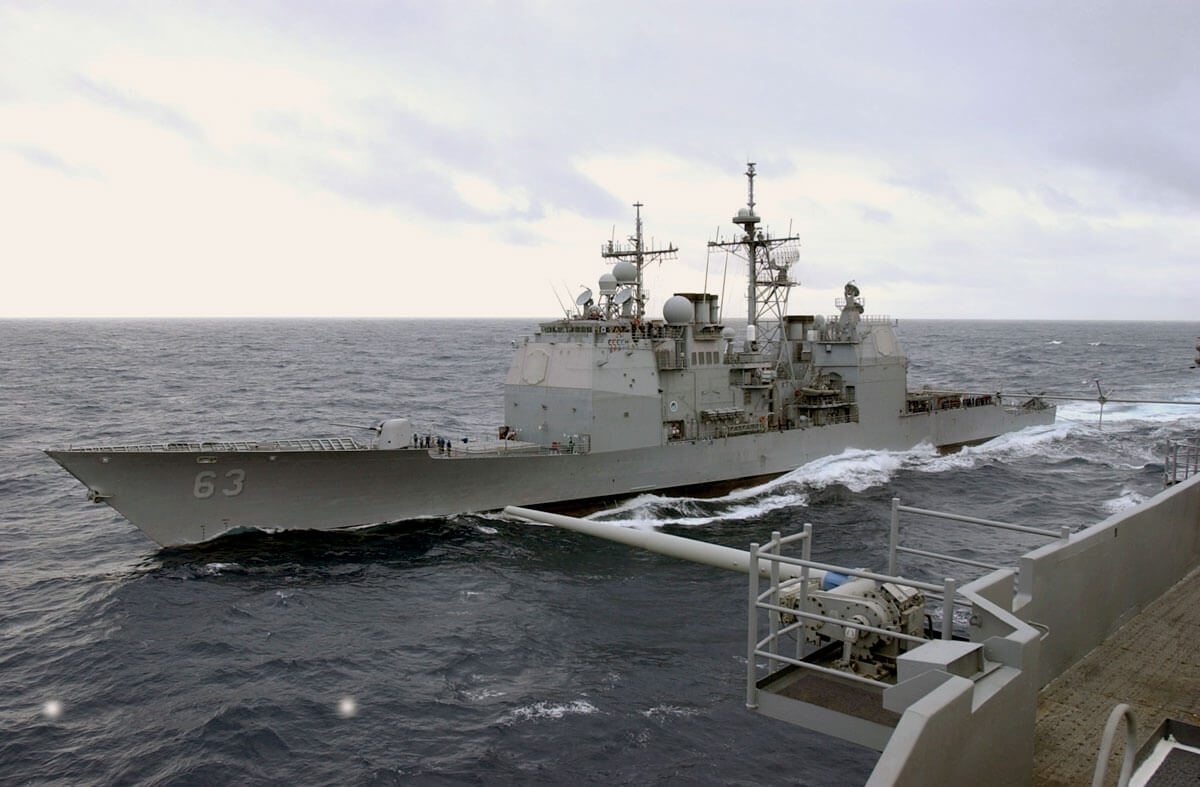
Steaming somewhere in the Yellow or South China Sea--I can’t remember specifically-- in the spring of 2008, our combat-information team on the USS Cowpens reported some unusual aircraft several miles away.  We learned later that they were Russian “bears,” which was some type of bomber.  We were not used to Russian bears flying so closely, but taking my cues from more experienced shipmates, I did not sense any danger.  We heightened our ship “readiness,” but the day and week passed by without incident. 

On the same deployment, the next week or so, combat-information spotted a Chinese submarine several miles away.  Similarly, there was no imminent danger--we were all just out cruising in international waters--but, for a crew used to just doing circles and drills for weeks at a time, it provided some excitement.  I came up to the bridge that late afternoon to take the watch as officer-of-the-deck (OOD) several hours after the submarine had been spotted.  The off-going OOD briefed me where it was, and I took the otherwise routine watch.  At one point, I called down to the captain to make a pretty standard report.  He then asked me where the Chinese sub was.  I told him I would call him right back with the information.  When I did, he berated me on the phone for not having “situational awareness” (SA), that is, for not knowing its location off the top of my head.  The captain was right.  An OOD should have had that information on hand.  I finished my watch, we finished our deployment, and we did not hear from the sub again.  

Reflecting later on the incident, I admitted, still, that the captain was right--I should have known--but at the same time, of course there was a Chinese submarine there.  We were in international waters yes, but relatively speaking, we were pretty close to China.  This was not off the coast of California or Alaska, or even Hawaii or Guam.  It made half-sense that there would be a Russian plane there, too.  We were, relatively speaking, not that far from Russia. 

Viewed from the Chinese or Russian perspective, should not they have been the ones alarmed, if there indeed was cause for alarm in the first place? Should not they have been the ones excited, as a US vessel (that was permanently deployed in Japan) cruised by?  Or should not they be the ones bothered when they consider the thousands of other US troops, planes, ships, bombs, and missiles stationed all around China and Russia?    

“Cognitive empathy” is a skill and virtue that would do the US foreign policy establishment, the US media, and Americans more broadly a lot of good.  Cognitive empathy, frequently articulated by writer/journalist Robert Wright, should not be confused with “emotional empathy.”  Cognitive empathy requires viewing a situation from an adversary’s perspective, not exactly feeling bad for them.  It requires temporarily withholding judgment to understand the causes of a current predicament.  Why is China acting the way it is?  Why is Russia?  (Or Iran or Venezuela?)  How does each country view our actions of the past two, five, ten, fifty, or 100 years?  Are they just angry and sociopathic, or do they have legitimate gripes, even if we don’t agree with those gripes?  (Here are two recent Robert Wright cognitive empathy pieces on Russia: Why Biden didn’t negotiate seriously with Putin (substack.com) and How cognitive empathy could have prevented the Ukraine crisis (substack.com).  Here is one on China: China and the Challenge of Cognitive Empathy (substack.com) )

Cognitive empathy does not preclude judgment and condemnation.  Regarding China, we should condemn its concentration camps of Uighurs, we should condemn its suppression of dissent in Hong Kong, we should stand in honest solidarity with Tibet, we should be concerned with its building of islands in the South China Sea, for instance.  Regarding Russia, we should condemn its recent military buildup along the border of Ukraine.  If it invades Ukraine, we should condemn that.  We should condemn the suppression of its own internal dissent.  Cognitive empathy and seeing things from their perspective does not mean that I would prefer to live in China or Russia ("Love it or leave it!").  It does not even mean I would prefer a China- or Russia- (or China-Russia-) led world order to a US-led world order. 

We should keep a healthy skepticism of US media when it comes to foreign policy and war.  That does not mean we automatically dismiss reports out of hand.  It does not mean there are not some good on-the-ground journalists doing rigorous work for the major corporate outlets.  However, empirical historical data shows that good reporting pieces have a difficult time making it up the chain when war is on the horizon--they have a hard time competing with the celebrity columnists and talking heads.  The Chomsky/Herman propaganda model from Manufacturing Consent (1988), in my view, is still very true.  Truth-telling happens, yes, but it ranks second behind profit-making.  Has The New York Times actually learned from its mea culpa in the build-up to Iraq? (If no one is held accountable, do they even have to?)  From Panama to Iraq I to the Balkans to Iraq II to Libya, has CNN ever met a war it didn’t like?  Need we recall that MSNBC fired Phil Donahue because he was an outspoken critic of the Iraq war?  (I don’t mention Fox here; it ceased pretending to be a serious news outlet many years ago; but picking on Fox, while necessary, is easy.)  Just to take one of many foreign policy/war sloppy stories from recent years, recall the Times Russians-paying-Afghan-bounty-hunters-to-take-out-US-soldiers story? Recall we liberals were up in arms about it because it fit with our Trump-loves-Putin-I-can’t-believe-he’s letting-Putin-get-away-with-this narrative? Yeah, so it turns out, it was not true.  Or at the least, it could not be confirmed.  Does anyone pay the consequences for such bad reporting, and shameless amplifying, or do they all keep getting promoted? 

At the same time though, having spent the past decade on the antiwar (not necessarily socialist) left, I’m also healthily skeptical of antiwar and alternative media that reflexively downplay the crimes or misdeeds of an adversary.  In rightly criticizing US nationalism or imperialism, some alternative outlets go too far in defending other countries’ nationalisms and imperialisms.  While we should stand in solidarity with Chinese people, Russian people, or Cuban people, for instance, I don’t believe we need to wholly defend the Chinese state, or the Russian state, or the Cuban state, for instance.  (In my short time on the more socialist left, I have seen less of this.  Socialist anti-imperialists, on their good days, see all imperialisms and all capitalisms/extractions as the problem.  US-led imperialism/capitalism just tends to be the most destructive.  Check out these long, scholarly critical-of-everyone interviews on Russia and China).     

If there is war with Russia or if there is war in Ukraine, yes, we must blame Russia for its aggression.  And, we must stand with Russians--and Ukrainians--who are resisting their own governments’ militarisms (like how this transnational group of women did).  However, if there is war in Ukraine, it must be noted that the US is to blame as well.  From the end of the Cold War to the current administration, the US has played a role in antagonizing Russia.  One very important factor has been the expansion of NATO:

Ukrainian entry into NATO is the brightest of all red lines for the Russian elite (not just Putin). In more than two and a half years of conversations with key Russian players, from knuckle-draggers in the dark recesses of the Kremlin to Putin’s sharpest liberal critics, I have yet to find anyone who views Ukraine in NATO as anything other than a direct challenge to Russian interests.


White House Press Secretaries Jen Psaki and Rachel Maddow might assume that this quote is from some "Putin apologist." But, it's from no less than William Burns, in 2008, then US ambassador to Russia and now director of the CIA.  He went on to say that it was “hard to overstate the strategic consequences” of offering Ukraine NATO membership, which, he predicted, would “create fertile soil for Russian meddling in Crimea and eastern Ukraine.”  Furthermore, if we felt the need to expand NATO, why would we not at least consider including Russia at that point in the ‘90s? (We did not ever give it serious consideration.)  Then-ambassador to the Soviet Union, Jack Matlock, wrote:

The plan to increase the membership of NATO fails to take account of the real international situation following the end of the Cold War, and proceeds in accord with a logic that made sense only during the Cold War. The division of Europe ended before there was any thought of taking new members into NATO. No one is threatening to re-divide Europe. It is therefore absurd to claim, as some have, that it is necessary to take new members into NATO to avoid a future division of Europe; if NATO is to be the principal instrument for unifying the continent, then logically the only way it can do so is by expanding to include all European countries. But that does not appear to be the aim of the administration, and even if it is, the way to reach it is not by admitting new members piecemeal.


From our exiting of various arms deals to our meddling/bombing in the Balkans--and the very quick recognition of Kosovo, for instance--to our actual or perceived role in the 2014 Ukraine coup to the Obama administration encouraging regime change in Russia itself, is it any wonder that Russia does not trust the US?  Absolutely, this does not justify a Russian invasion.  Sure, there was a case to be made for Kosovo. Sure, we might tell Russia they shouldn’t feel encircled--and yes, absolutely don’t take it on any innocents sure to be killed in an invasion of Ukraine--but cognitive empathy requires us to stand back and take stock.        

Taking stock also requires looking at structures and institutions and histories of Russia not just lazily focusing on the singular personality of Vladimir Putin.  Putin is a symptom of recent Russian history, not the cause.  Liberals and Democrats looked for Vladimir Putin behind every one of Trump’s nefarious actions and all nefarious actions worldwide.  (Trump, by the way, for all his strange personal overtures to Putin, was quite concretely hawkish on Russia.)   Tony Wood’s Beyond Putin: Money, Power, and the Myths of the New Cold War is a highly recommended corrective to the facile mainstream obsession with Putin-the-man.  The book does not paint a rosy picture of him, but it depicts him as a creature of and from a particular social-political-economic milieu.  Not only is the singular focus on Putin-the-man lazy and incorrect.  It is convenient.  We are able to just say, “He’s crazy or ruthless,” and not consider--enter cognitive empathy!--the forces that move and shape him, both foreign and domestic (he still might be ruthless but I don't think crazy).  We don’t seem to commit that same error with China.  Rarely do we say “Xi did a, b, or c.”  We tend to say, “China did x, y, or z.”

But, we do commit many errors with China.  There is much to say about our misguided approach to China, but because we are not at the moment saber-rattling with them, I will not go into great detail (I have previously).  However, a couple quick notes. One, we should keep in mind that, between 1820 and 1949, the US intervened in China no fewer than thirty times with “dollar diplomacy,” or “gunboat diplomacy," or helping the British to force opium upon their markets, or forcing them to open their markets to other goods, or many other small invasions/extractions.  Two, at the end of World War I, Woodrow Wilson and the victorious allies gave the German colonized region of China to…Japan.  Blowback occurred in many ways (see Japan 1910s to 1945), but it also occurred in the the form of Mao and the communist revolution. Meanwhile, Wilsonian hypocrisy, dressed in lofty rhetoric, lives on in the US.  (I hope there are no moves on Taiwan--on the Cowpens I had to miss a Sting/Police concert in Tokyo because we were sent to go steaming off the coast of Taiwan during their elections as show of strength. I guess we were successful.  I hope Taiwan and China can live together amicably.  But, a cognitive empathy thought exercise is helpful to understand how China views Taiwan.  You may not agree with China’s perspective or Wright’s analogy, but if we want to lessen the chances of war, it would behoove us to understand.)

The Chinese and Russian states certainly have their crimes.  However, I believe what Martin Luther King, Jr., said in his “Beyond Vietnam” speech--a speech that was derided by the The New York Times, The Washington Post, and by many of his liberal civil rights allies: the U.S. is the “greatest purveyor of violence in the world today.”  Since the end of World War II, from outright wars in Vietnam and Iraq, to CIA coups in Guatemala and Chile, to “Washington consensus”/IMF “structural adjustment programs” and debt-wealth extraction and so-called “free-trade agreements,” it is hard to find a government during these years that has killed, starved, or immiserated, directly or indirectly, more people on earth than the United States has.  All the while saying it is doing the opposite--that it is liberating.

The point is not to keep count or to rank atrocities or to prove that the US (instead of Vladimir Putin) is behind every bad action. I just think it might make our overtures for peace more credible and maybe even more effective. As a citizen of the US, I have more agency with this government--and by extension, some agency with US client states like Israel, Ukraine, Egypt, or Colombia--and that is why I start here. But, we shouldn't stop here either.

Peace! Solidarity!